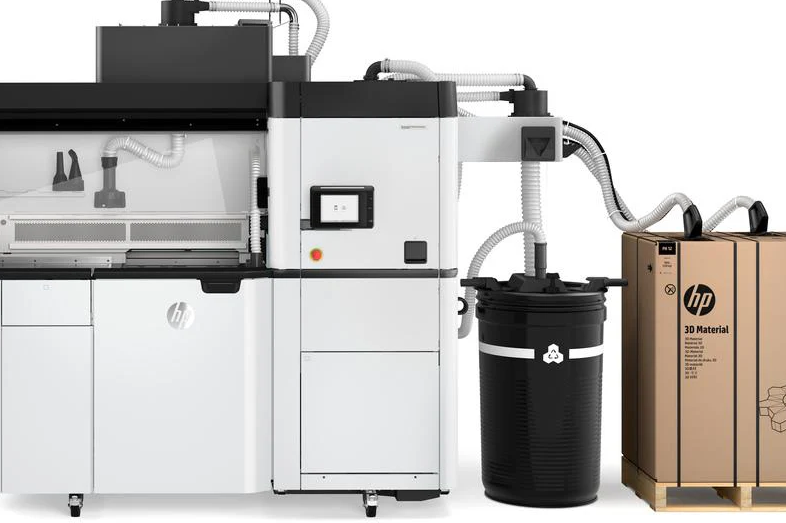
Multi Jet Fusion (MJF) 3D Printing: Complete Guide
How MJF works, how it compares to other methods, and when to use it for the best results in functional prototypes and low-volume production.
Read the ArticleHighest-temperature PEI - chemical-resistant and sterilizable.
ULTEM 1010 is a high-temperature, chemical-resistant PEI with the highest heat tolerance in our catalog. It withstands repeated sterilization and aggressive environments, making it suited to industrial, medical, and food-contact-capable applications.
Polyetherimide (PEI) 1010, printed with Fused Deposition Modeling (FDM). Every order is reviewed by our engineering team - no minimum order quantity.
Choose ULTEM 1010 when no other printed material can handle the temperature or chemical environment. At 216 °C HDT, it survives autoclave sterilization (134 °C, 30+ minutes), sustained under-hood automotive temperatures, and industrial process heat that would destroy every other material in this catalog. It also resists a wide range of chemicals including hydrocarbons, alcohols, and many acids.
If your primary need is aerospace FST compliance rather than extreme temperature, ULTEM 9085 is the better choice - it is optimized for flame-smoke-toxicity performance and offers better elongation. ULTEM 1010 does not carry the same FST ratings.
For applications below 130 °C where flame retardancy is the driver, PC-FR delivers at a fraction of the cost. ULTEM 1010 is the material of last resort when temperature, chemical resistance, or sterilizability is non-negotiable. Its cost and lead time reflect that - expect $$$$ pricing and 7–14 business day lead times.
Representative values - process- and orientation-dependent. Full technical datasheet available on request.
Plan features to print reliably and assemble cleanly in ULTEM 1010. Need DFM help?
Typical tolerance is ±0.25 mm or ±0.2% on industrial FDM platforms. ULTEM 1010 has higher shrinkage than 9085, requiring careful build planning for large parts. Z-axis anisotropy is present - critical load paths should be oriented in XY. Post-machining is available and recommended for critical bores, sealing surfaces, and mating features.
ULTEM 1010 requires the highest-temperature industrial FDM equipment available (Stratasys F900 or equivalent) with chamber temperatures exceeding 200 °C and nozzle temperatures of 370–420 °C. Build and cool-down cycles are long - large parts may require 24+ hours of controlled cooling to prevent warping and stress cracking. ULTEM 1010 is extremely hygroscopic and requires aggressive drying (150 °C, 6+ hours). Support removal can be challenging; soluble support systems are preferred for complex geometry.
ULTEM 1010 alongside related materials.
| ULTEM 1010 | ULTEM 9085 | PC-FR | PA12 (MJF) | |
|---|---|---|---|---|
| Tensile strength | 48–81 MPa | 42–69 MPa | 60 ± 4 MPa | 48 MPa |
| Heat deflection (HDT) | 216 °C @ 0.45 MPa | 153 °C @ 1.82 MPa | 113 °C @ 0.45 MPa | 175 °C @ 0.45 MPa |
| Flexural modulus | 2,230–2,820 MPa | 2,050–2,300 MPa | 1,890 ± 70 MPa | 1,730 MPa |
| Elongation | 3–6% | 5–6% | 5–8% | 15–20% |
| Density | 1.27 g/cm³ | 1.34 g/cm³ | 1.20 g/cm³ | 1.01 g/cm³ |
| Relative cost | $$$$ | $$$$ | $$ | $$ |
Where ULTEM 1010 fits, where it doesn't, and what to use instead.
216 °C HDT at 0.45 MPa - survives sustained service temperatures that exceed every other printable plastic in our catalog by at least 63 °C.
EnergyWithstands repeated 134 °C / 30-minute autoclave cycles without dimensional degradation - one of the few printable materials suitable for reusable sterilizable tooling.
Medical DevicesResists hydrocarbons, alcohols, automotive fluids, and many acids, enabling direct contact with process chemicals that attack nylons and ABS.
EngineeringSurvives 180 °C autoclave cure cycles for carbon-fiber prepreg - replacing machined aluminum tools at 50% the weight and no CNC setup cost.
AerospaceSelect grades are FDA-compliant for direct food contact, usable for production reusable food-handling fixtures and container inserts.
Consumer ProductsFinishing options and in-stock colors for ULTEM 1010.
As-printed industrial finish; support removal.
Best for: End-use & high-temp parts
Custom colors and dyeing available on request. Contact us for options.
How MJF works, how it compares to other methods, and when to use it for the best results in functional prototypes and low-volume production.
Read the Article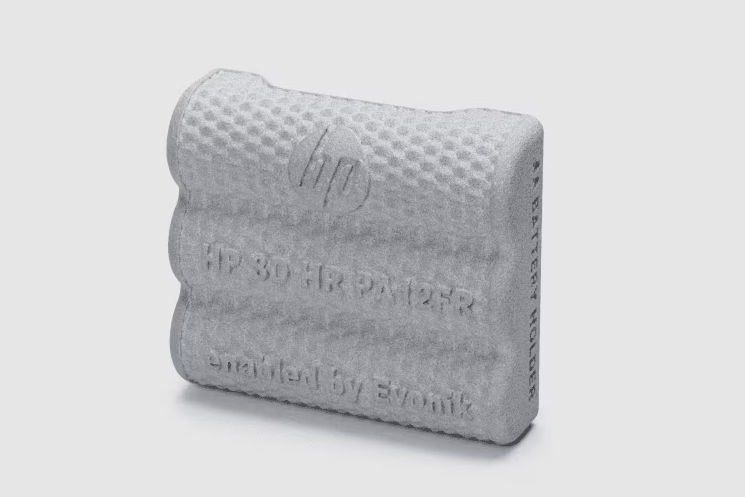
Many failures come from excessive deflection, creep, or cracking rather than lack of strength. Understanding PA12, PA11, glass-bead PA12, TPU, and FR grades.
Read the Article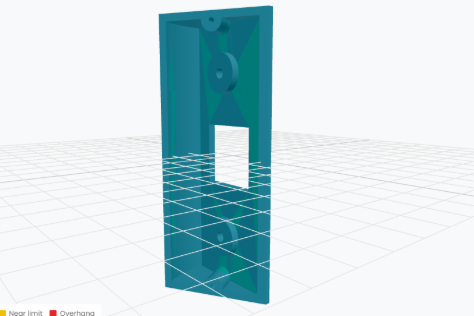
Wall thickness, tolerances, supports, and hole sizing rules for printable parts.
Read the Article