
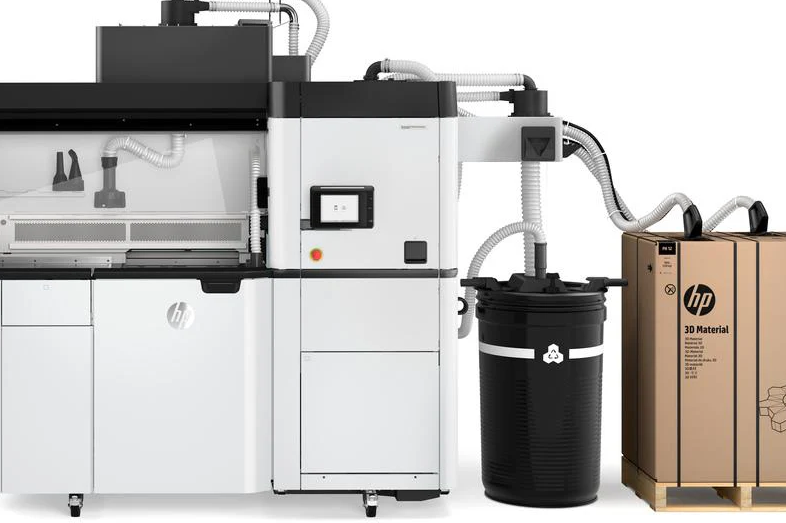
Multi Jet Fusion (MJF) 3D Printing: Complete Guide
How MJF works, how it compares to other methods, and when to use it for the best results in functional prototypes and low-volume production.
Read the ArticleMid-firm flexible filament balancing elasticity with wear resistance.
TPU 90A is a slightly harder flexible material than 85A, offering greater structural integrity and wear resistance while staying genuinely flexible. It is a strong all-round choice for functional flexible parts such as bushings, tread, and protective components.
Thermoplastic Polyurethane (Shore 90A), printed with Fused Deposition Modeling (FDM). Every order is reviewed by our engineering team - no minimum order quantity.
Choose TPU 90A when you need a flexible part that must also withstand wear, abrasion, or repeated mechanical cycling. At Shore 90A, the material feels firm-flexible - it bends and compresses under deliberate force but holds its shape under gravity. This makes it ideal for bushings, bumpers, RC tires, and protective cases.
Compared to TPU 85A, 90A sacrifices some softness for measurably better wear resistance and print reliability. If you need a soft grip or cushioning pad, 85A is the better choice. If you need the part to maintain structural definition while still absorbing impact - phone cases, bumper guards, flexible hinges - 90A hits the sweet spot.
TPU 95A is firmer still and auto-quotable, making it faster to order. But 95A starts to feel more like a stiff rubber than a flexible one. For RC tires, shoe prototypes, and protective bumpers where genuine flex matters, 90A delivers the right balance.
Representative values - process- and orientation-dependent. Full technical datasheet available on request.
Plan features to print reliably and assemble cleanly in TPU 90A. Need DFM help?
Dimensional tolerance is ±0.5 mm or ±0.8%. TPU 90A holds shape slightly better than 85A during printing due to its greater rigidity, so tall features are more accurate. However, the material still deforms under clamping or measuring pressure, so functional fits should include 0.5+ mm clearance.
TPU 90A prints at 220–240 °C nozzle / 30–50 °C bed at reduced speeds (25–35 mm/s). A direct-drive extruder is required. Retraction is kept to 0.5–1.5 mm to prevent filament jams. Slightly faster print speeds are possible compared to 85A because the material is firmer and less prone to buckling. We dry TPU 90A at 50 °C for 6+ hours - wet TPU produces bubbles and poor layer bonding. Supports are minimized through orientation planning; when required, they separate more cleanly than from 85A due to the firmer material.
TPU 90A alongside related materials.
| TPU 90A | TPU 85A | TPU 95A | PA11 (SLS) | |
|---|---|---|---|---|
| Tensile strength | 12.5 ± 0.8 MPa | 12.0 ± 0.8 MPa | 27.3 ± 0.8 MPa | 47 MPa |
| Heat deflection (HDT) | - | - | - | 157 °C @ 0.45 MPa |
| Flexural modulus | Low (elastomer) | Low (elastomer) | Low–medium (elastomer) | ≈ 1,100 MPa |
| Elongation | 300–400% | 330–450% | 250–350% | 40–50% |
| Density | 1.20 g/cm³ | 1.18 g/cm³ | 1.22 g/cm³ | 1.02 g/cm³ |
| Relative cost | $$ | $$ | $$ | $$$ |
Where TPU 90A fits, where it doesn't, and what to use instead.
Shore 90A holds shape under gravity but deforms under deliberate force, providing impact absorption with enough rigidity to maintain positional accuracy in bushing applications.
EngineeringBalances grip and wear resistance - softer than 95A for better traction on smooth surfaces while lasting 2–3x longer than 85A under abrasive track conditions.
RoboticsAbsorbs drop impact through elastic deformation and returns to shape, surviving repeated 1.5 m drops that would crack rigid ABS cases.
Consumer ProductsFatigue resistance survives thousands of flex cycles without cracking - outperforms rigid plastics by orders of magnitude for hinge features that cycle daily.
Consumer ProductsFirmness approximates commercial shoe midsole compounds, letting designers validate cushioning, tread pattern, and ground-feel before committing to injection molds.
Consumer ProductsFinishing options and in-stock colors for TPU 90A.
As-printed; matte flexible surface.
Best for: Functional flexible parts
Custom colors and dyeing available on request. Contact us for options.
How MJF works, how it compares to other methods, and when to use it for the best results in functional prototypes and low-volume production.
Read the Article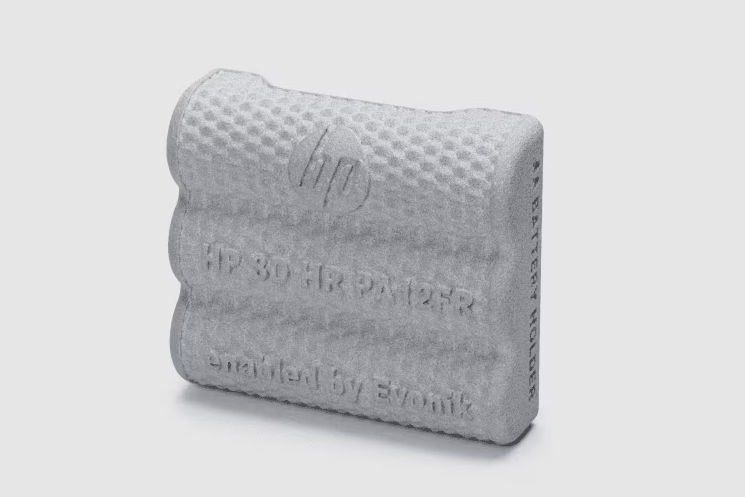
Many failures come from excessive deflection, creep, or cracking rather than lack of strength. Understanding PA12, PA11, glass-bead PA12, TPU, and FR grades.
Read the Article