
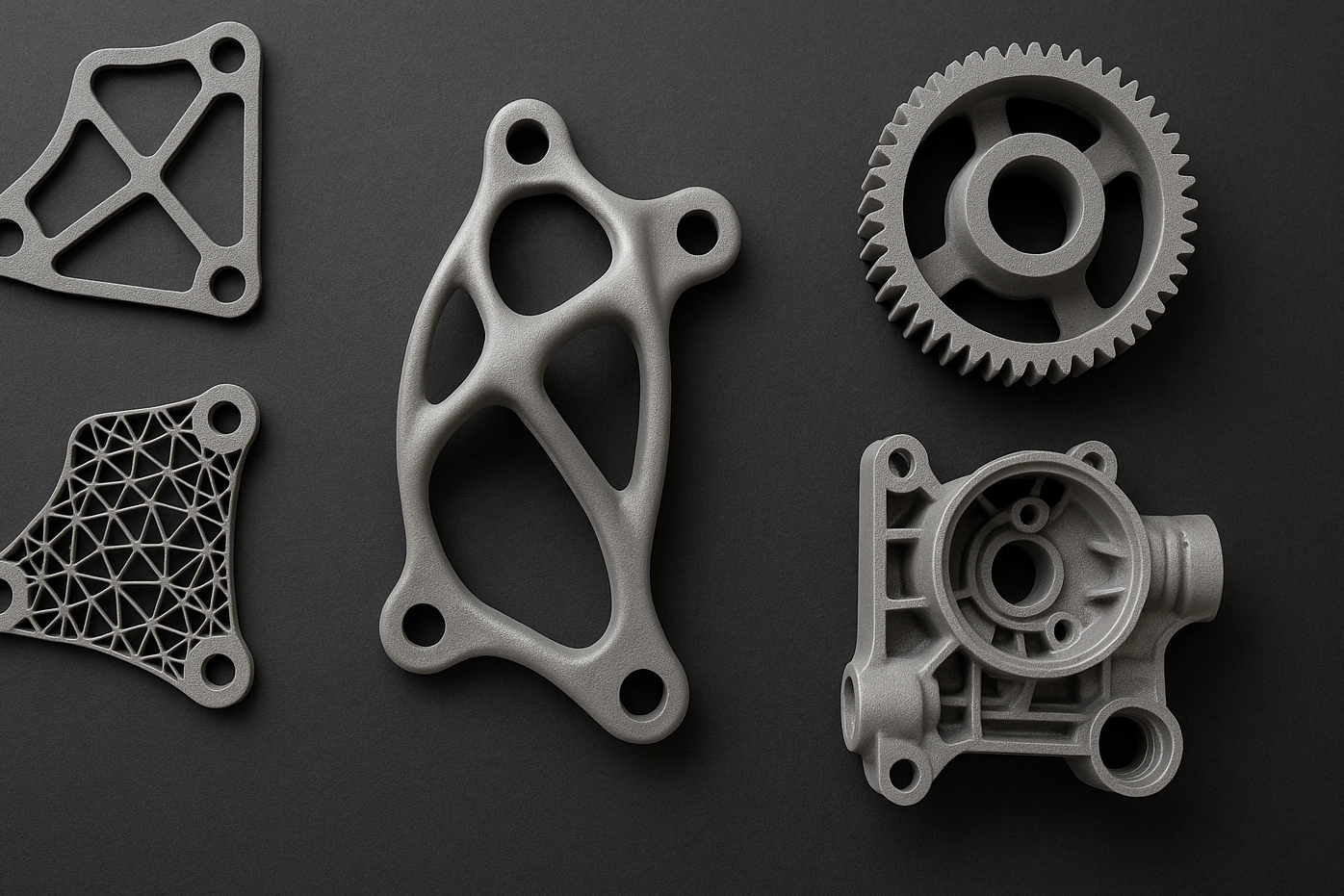
Your Guide to SLS: Advantages, Materials, and Best Practices
Selective Laser Sintering for complex, functional prototypes and end-use parts. Advantages, materials, design guidelines, and faster production.
Read the ArticleSoft, highly elastic rubber-like material for the most flexible parts.
TPU 85A is the softest flexible filament in our lineup, with high elasticity and excellent rebound. It suits parts that need to bend, stretch, or cushion - soft grips, gaskets, and wearables - where a rubber-like feel is the priority.
Thermoplastic Polyurethane (Shore 85A), printed with Fused Deposition Modeling (FDM). Every order is reviewed by our engineering team - no minimum order quantity.
Choose TPU 85A when the part needs to feel and perform like soft rubber. At Shore 85A, this is the most flexible material we print - it compresses easily under finger pressure, stretches to 4x its length, and rebounds fully. It is the right pick for soft-touch grips, cushioning pads, flexible gaskets, and wearable comfort layers.
If you need flexibility with more structural integrity - bushings, tires, protective bumpers - TPU 90A is firmer and more wear-resistant while still flexible. If the part needs to hold its shape under any load, TPU 95A is the firmest option and also the most print-reliable. For truly structural parts that flex, SLS PA11 offers high elongation (40–50%) in a rigid nylon - a different kind of flexibility.
TPU 85A is manually quoted because its extreme softness requires careful print planning. Lead time may be slightly longer than auto-quoted materials. If your geometry is simple and you want fast turnaround on a flexible part, consider TPU 95A, which runs through our instant quoter.
Representative values - process- and orientation-dependent. Full technical datasheet available on request.
Plan features to print reliably and assemble cleanly in TPU 85A. Need DFM help?
Dimensional tolerance is ±0.5 mm or ±1.0% due to the flexible nature of the material - it deforms under its own weight during printing, especially on tall or thin features. Accuracy improves on shorter, wider geometries. Post-machining is not practical on TPU; design critical fits into the geometry with appropriate clearance.
TPU 85A prints at 220–240 °C nozzle / 30–50 °C bed at reduced speeds (20–30 mm/s) to prevent filament buckling in the extruder. A direct-drive extruder is required - Bowden setups cannot reliably push this soft a filament. Retraction must be minimized (0.5–1.0 mm max) to prevent jams. No enclosure is strictly required but stable ambient temperature helps adhesion. TPU is hygroscopic; we dry at 50 °C for 6+ hours before printing. Supports are difficult to remove from TPU without tearing the part, so we orient aggressively to avoid supports entirely.
TPU 85A alongside related materials.
| TPU 85A | TPU 90A | TPU 95A | PA11 (SLS) | |
|---|---|---|---|---|
| Tensile strength | 12.0 ± 0.8 MPa | 12.5 ± 0.8 MPa | 27.3 ± 0.8 MPa | 47 MPa |
| Heat deflection (HDT) | - | - | - | 157 °C @ 0.45 MPa |
| Flexural modulus | Low (elastomer) | Low (elastomer) | Low–medium (elastomer) | ≈ 1,100 MPa |
| Elongation | 330–450% | 300–400% | 250–350% | 40–50% |
| Density | 1.18 g/cm³ | 1.20 g/cm³ | 1.22 g/cm³ | 1.02 g/cm³ |
| Relative cost | $$ | $$ | $$ | $$$ |
Where TPU 85A fits, where it doesn't, and what to use instead.
Shore 85A compresses under light finger pressure and rebounds instantly, delivering the tactile cushioning needed for ergonomic tool handles and controller grips.
Consumer Products330–450% elongation lets thin gasket profiles conform to irregular flanges under 15–25% compression without tearing or taking a permanent set.
EngineeringSoft enough to conform to body contours while absorbing vibration - used in orthotic liners, VR headset face gaskets, and helmet padding prototypes.
Medical DevicesElastomeric rebound absorbs 60–70% of transmitted vibration energy at frequencies typical of motor and compressor mounts (30–200 Hz).
RoboticsWraps around and stretches over irregular geometries for dust seals, connector boots, and cable strain reliefs that snap on and off without tools.
Consumer ProductsFinishing options and in-stock colors for TPU 85A.
As-printed; matte flexible surface.
Best for: Functional flexible parts
Custom colors and dyeing available on request. Contact us for options.
Selective Laser Sintering for complex, functional prototypes and end-use parts. Advantages, materials, design guidelines, and faster production.
Read the Article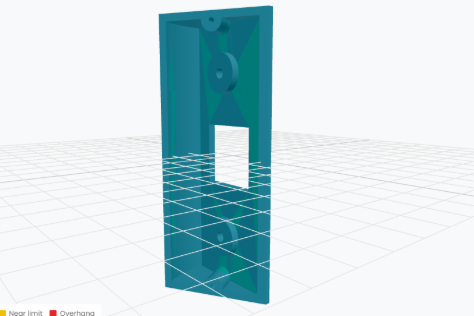
Wall thickness, tolerances, supports, and hole sizing rules for printable parts.
Read the Article