Your Guide to SLS: Advantages, Materials, and Best Practices
Selective Laser Sintering for complex, functional prototypes and end-use parts. Advantages, materials, design guidelines, and faster production.
Read the ArticleBio-based nylon with high ductility and impact resistance.
Nylon PA11 is a bio-based polyamide that is more ductile and impact-resistant than PA12, with excellent elongation. It excels at parts that must flex, absorb impact, or survive repeated stress - living hinges, snap-fits, and durable functional components.
Nylon Polyamide 11 - SLS, printed with Selective Laser Sintering (SLS). Every order is reviewed by our engineering team - no minimum order quantity.
Choose PA11 when your nylon part must survive impact, repeated flexing, or snap-fit assembly and disassembly. PA11's 40–50% elongation and high impact resistance make it the nylon to pick for living hinges, snap clips, prosthetic sockets, sports equipment, and any part that must bend without breaking.
PA12 is stiffer and more dimensionally stable, so if your part needs to hold shape under load without flexing, PA12 is the better choice. PA11 is about 35% less stiff (1,100 MPa vs 1,730 MPa flex modulus), which means it deflects more under the same load - a feature when you want flexibility, a problem when you need rigidity.
For flexible parts that need to be elastomeric rather than just ductile - gaskets, bumpers, soft grips - TPU (85A, 90A, or 95A) is the right family. PA11 bends and survives impact, but it is still a rigid plastic at rest. TPU is a true elastomer that compresses and rebounds like rubber.
Representative values - process- and orientation-dependent. Full technical datasheet available on request.
Plan features to print reliably and assemble cleanly in PA11 (SLS). Need DFM help?
Typical tolerance is ±0.3 mm or ±0.3%, matching PA12. PA11 may exhibit slightly more post-print shrinkage than PA12 due to differences in crystallization behavior. For parts with living hinges, ensure the hinge region is oriented in the XY plane for maximum flexibility. Post-machining is available for critical features.
SLS PA11 parts are produced on industrial powder-bed systems. PA11 sinters at approximately 195-200 °C using the same laser sintering process as PA12, with support-free design freedom. PA11 powder is bio-sourced from castor oil and handled in controlled-humidity environments. Cooling cycles are critical - rushing cool-down reduces the elongation and ductility that make PA11 valuable. Z-axis properties are approximately 80% of XY.
PA11 (SLS) alongside related materials.
| PA11 (SLS) | PA12 (SLS) | TPU 95A | PA12 (MJF) | |
|---|---|---|---|---|
| Tensile strength | 47 MPa | 48 MPa | 27.3 ± 0.8 MPa | 48 MPa |
| Heat deflection (HDT) | 157 °C @ 0.45 MPa | 154 °C @ 0.45 MPa | - | 175 °C @ 0.45 MPa |
| Flexural modulus | ≈ 1,100 MPa | 1,730 MPa | Low–medium (elastomer) | 1,730 MPa |
| Elongation | 40–50% | 15–20% | 250–350% | 15–20% |
| Density | 1.02 g/cm³ | 1.01 g/cm³ | 1.22 g/cm³ | 1.01 g/cm³ |
| Relative cost | $$$ | $$$ | $$ | $$ |
Where PA11 (SLS) fits, where it doesn't, and what to use instead.
40–50% elongation survives thousands of flex cycles without cracking - the benchmark nylon for snap arms that must withstand daily assembly and disassembly.
Consumer ProductsAbsorbs sharp impacts that crack PA12 (15–20% elongation) - the right nylon for hand-held devices, ruggedized enclosures, and field equipment.
EngineeringBio-based, ductile, and comfortable against skin - used in shin guards, helmet inserts, and protective gear where impact absorption matters.
Consumer ProductsImpact resistance and ductility handle the cyclic mechanical demands of daily prosthetic use; bio-based feedstock appeals to medical procurement.
Medical Devices35% less stiff than PA12 (1,100 vs 1,730 MPa) - a feature, not a bug - for parts that must give under load rather than crack.
EngineeringFinishing options and in-stock colors for PA11 (SLS).
De-powdered, matte natural finish.
Best for: Functional parts
Smoother, satin surface.
Best for: Handled parts
Acid dye penetrates the surface.
Best for: Cosmetic uniformity
Custom colors and dyeing available on request. Contact us for options.
Selective Laser Sintering for complex, functional prototypes and end-use parts. Advantages, materials, design guidelines, and faster production.
Read the Article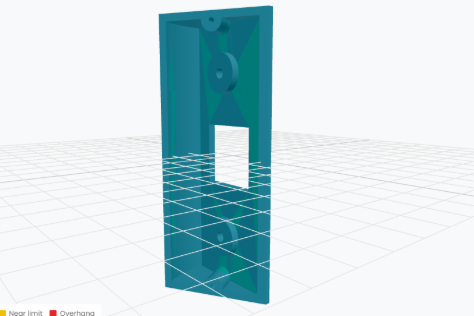
Wall thickness, tolerances, supports, and hole sizing rules for printable parts.
Read the Article