
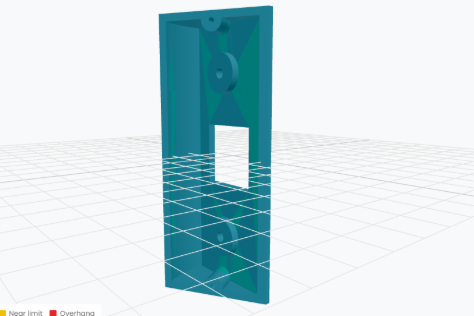
DFM for 3D Printing: A Practical Design Guide
Wall thickness, tolerances, supports, and hole sizing rules for printable parts.
Read the ArticleLow-cost, dimensionally stable plastic for fast, accurate visual prototypes.
PLA is the most cost-effective and design-tolerant FDM material. It prints crisply with minimal warping, holds fine detail, and is ideal for early-stage prototypes, form studies, and display models that won't see heat or load.
Polylactic Acid, printed with Fused Deposition Modeling (FDM). Every order is reviewed by our engineering team - no minimum order quantity.
Choose PLA when you need the fastest, cheapest physical part possible and the part will not see heat above 50 °C or meaningful mechanical load. It is the right call for design reviews, form checks, trade-show models, and any situation where you need to hold geometry in your hand without caring about durability.
If your part will live in an enclosure, a car interior, or anywhere temperatures exceed 55 °C, move to ABS or ASA. If the part needs to survive drops or repeated stress, ABS gives you toughness at a modest cost bump. If stiffness is the priority but you still want the easy printability of PLA, PLA-CF delivers higher rigidity with similarly low warping.
PLA is also the best starting point when you are iterating on geometry rapidly - its low cost and fast print speed let you cycle through revisions in hours, then switch to a production material once the design is locked.
Representative values - process- and orientation-dependent. Full technical datasheet available on request.
Plan features to print reliably and assemble cleanly in PLA. Need DFM help?
Typical dimensional tolerance is ±0.3 mm or ±0.3%, whichever is greater, on well-designed parts. Accuracy is best on features in the XY plane; tall Z-axis features may drift ±0.1 mm more due to layer stacking. Post-machining (drilling, reaming) is available for critical bores and mating surfaces.
PLA prints at 200–220 °C nozzle / 45–60 °C bed with no enclosure required, making it the simplest FDM material to run. Warping is negligible even on large flat parts so heated-chamber printers are unnecessary. PLA is not particularly moisture-sensitive, but filament stored in humid conditions can produce surface stringing - we pre-dry all spools at 45 °C for 4+ hours before printing. Supports break away cleanly in PLA, and fine bridging performs well, so complex overhangs are manageable. Standard brass nozzles work; no hardened nozzle needed.
PLA alongside related materials.
| PLA | ABS | PLA-CF | ASA | |
|---|---|---|---|---|
| Tensile strength | 30 ± 5 MPa | 33 ± 3 MPa | 38 ± 4 MPa | 37 ± 3 MPa |
| Heat deflection (HDT) | 58 °C @ 0.45 MPa | 87 °C @ 0.45 MPa | 55 °C @ 0.45 MPa | 100 °C @ 0.45 MPa |
| Flexural modulus | ≈ 2,750 MPa | ≈ 2,200 MPa | ≈ 3,700 MPa | 1,920 ± 130 MPa |
| Elongation | 8–10% | 10–15% | 3–5% | 8–12% |
| Density | 1.20 g/cm³ | 1.05 g/cm³ | 1.22 g/cm³ | 1.07 g/cm³ |
| Relative cost | $ | $$ | $$ | $$$ |
Where PLA fits, where it doesn't, and what to use instead.
PLA's minimal warping and 100 µm resolution produce crisp geometry for design reviews where visual accuracy matters more than mechanical performance.
Art And DesignAt the $ cost tier, PLA lets teams iterate through 5–10 physical revisions for the price of one ABS build, accelerating design convergence.
Consumer ProductsDimensional accuracy of ±0.3 mm and negligible warp make PLA reliable for verifying clearances and snap-fit geometry before committing to production tooling.
EngineeringLow shrinkage holds fine wall details and window mullions at 1:50 and 1:100 scales that ABS would warp out of tolerance.
ArchitectureNo enclosure or special handling required - PLA runs on any FDM printer with minimal setup, keeping cost under $5 for most small educational models.
Finishing options and in-stock colors for PLA.
As-printed with support removal; visible layer lines.
Best for: Prototypes, fit checks
Knocked-down layer lines, primer-ready surface.
Best for: Paint-ready models
Custom colors and dyeing available on request. Contact us for options.
Wall thickness, tolerances, supports, and hole sizing rules for printable parts.
Read the Article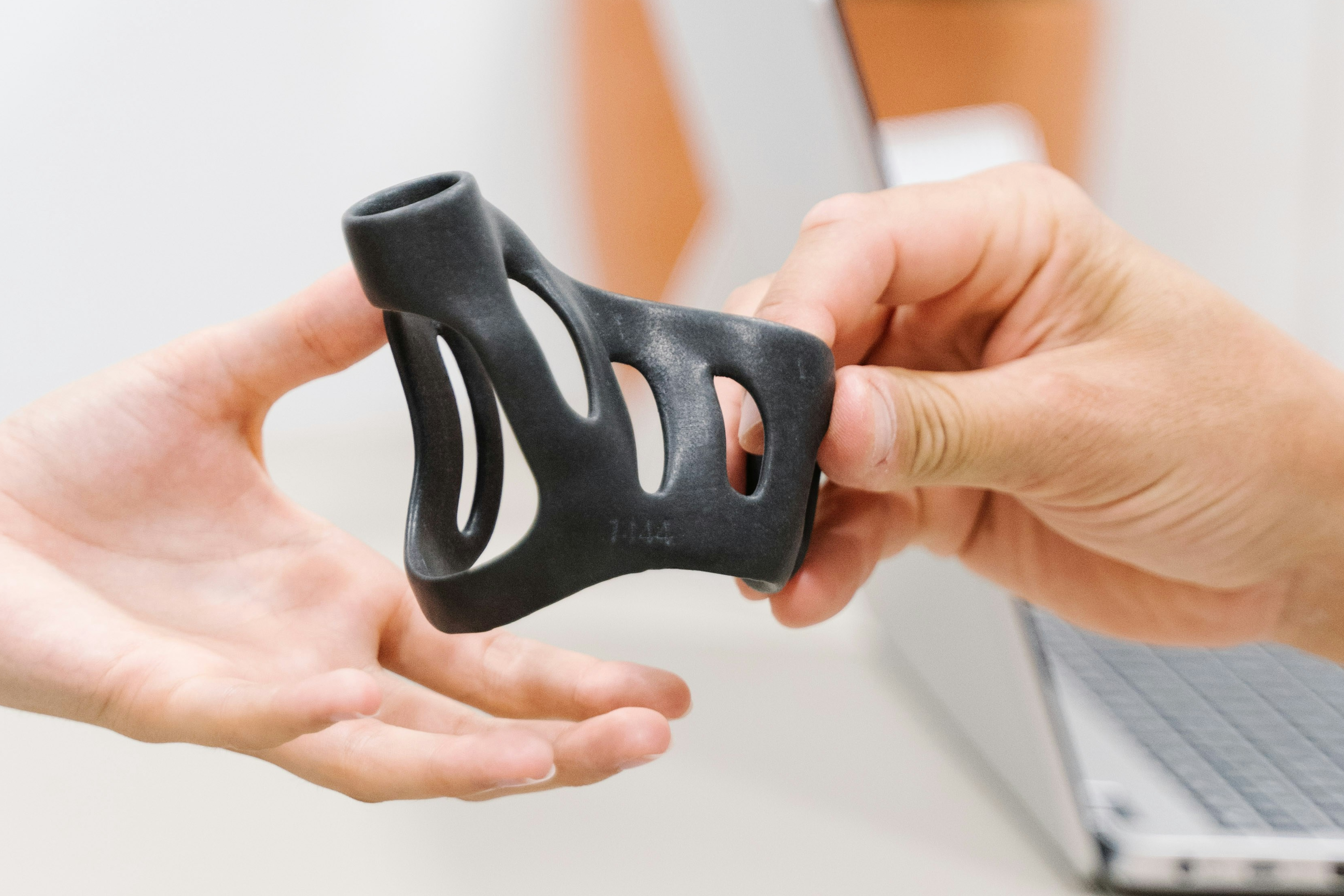
A breakdown of FDM, SLA, SLS, MJF, and CNC machining for prototype development: when to use each, how to match process and material to your validation goal.
Read the Article