
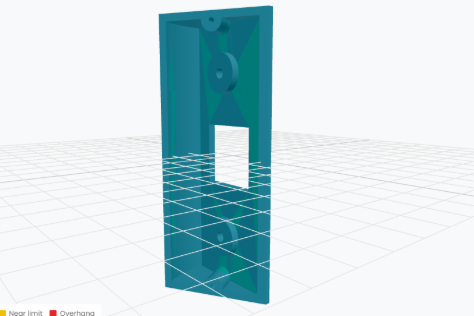
DFM for 3D Printing: A Practical Design Guide
Wall thickness, tolerances, supports, and hole sizing rules for printable parts.
Read the ArticleUV- and weather-resistant plastic built for the outdoors.
ASA delivers ABS-like toughness with markedly better UV and weather resistance, making it the default choice for parts that live outdoors. It resists yellowing and embrittlement from sun exposure while holding good mechanical strength and heat tolerance.
Acrylonitrile Styrene Acrylate, printed with Fused Deposition Modeling (FDM). Every order is reviewed by our engineering team - no minimum order quantity.
Choose ASA whenever a part will be exposed to sunlight, rain, or outdoor weather. It is the only FDM material in our catalog engineered specifically for UV stability - ABS, PLA, and even nylon will yellow, crack, or degrade outdoors within months, while ASA holds its color and mechanical properties through years of sun exposure.
ASA's mechanical properties are comparable to ABS: similar tensile strength, impact resistance, and heat deflection (100 °C). The trade-off is cost - ASA runs at the $$$ tier vs $$ for ABS. If your part stays indoors, ABS saves money with equivalent performance.
For outdoor parts that also need high stiffness, there is no direct FDM composite in ASA - consider SLS PA12-GF or PA12-AF, which combine stiffness with reasonable weather tolerance in a powder-bed process. For outdoor parts that need flexibility, no FDM material excels; discuss your application with us.
Representative values - process- and orientation-dependent. Full technical datasheet available on request.
Plan features to print reliably and assemble cleanly in ASA. Need DFM help?
Typical tolerance is ±0.3 mm or ±0.5%, matching ABS. ASA has similar shrinkage characteristics to ABS, so warp mitigation practices apply: uniform wall thickness, avoid large flat unsupported spans, and orient critical features in the XY plane. Post-machining is available for critical bores and mating surfaces.
ASA prints at 240–260 °C nozzle / 90–110 °C bed and requires an enclosed, heated chamber - warping tendency is comparable to ABS. We hold chamber ambient at 45–55 °C. ASA is moisture-sensitive and must be dried at 65 °C for 4+ hours before printing; wet ASA produces visible bubbles and poor inter-layer adhesion. Support strategy mirrors ABS: breakaway supports with careful removal. Standard brass nozzles are fine. ASA emits mild fumes similar to ABS, so we run all ASA jobs with active chamber filtration.
ASA alongside related materials.
| ASA | ABS | ABS-GF | PC-FR | |
|---|---|---|---|---|
| Tensile strength | 37 ± 3 MPa | 33 ± 3 MPa | 36 ± 3 MPa | 60 ± 4 MPa |
| Heat deflection (HDT) | 100 °C @ 0.45 MPa | 87 °C @ 0.45 MPa | 99 °C @ 0.45 MPa | 113 °C @ 0.45 MPa |
| Flexural modulus | 1,920 ± 130 MPa | ≈ 2,200 MPa | 2,860 ± 130 MPa | 1,890 ± 70 MPa |
| Elongation | 8–12% | 10–15% | 3–5% | 5–8% |
| Density | 1.07 g/cm³ | 1.05 g/cm³ | 1.12 g/cm³ | 1.20 g/cm³ |
| Relative cost | $$$ | $$ | $$ | $$ |
Where ASA fits, where it doesn't, and what to use instead.
Retains >80% impact strength after 2,000+ hours of accelerated UV weathering - conditions that destroy ABS in under 500 hours.
Energy100 °C HDT handles direct sun on dark-colored parts without warping, and UV stability prevents the chalking and cracking that rules out ABS for exterior use.
AutomotiveResists yellowing for 3+ years in direct sun exposure, maintaining brand-color consistency where painted ABS would need repainting annually.
Weather resistance keeps enclosure seals intact and wall dimensions stable through temperature cycling from -20 °C to +80 °C ambient.
EnergyThe only FDM material in our catalog engineered for multi-year outdoor deployment without UV-protective coatings or secondary finishing.
EnergyFinishing options and in-stock colors for ASA.
As-printed with support removal; visible layer lines.
Best for: Outdoor functional parts
Improves sheen and surface sealing.
Best for: Cosmetic outdoor housings
Custom colors and dyeing available on request. Contact us for options.
Wall thickness, tolerances, supports, and hole sizing rules for printable parts.
Read the Article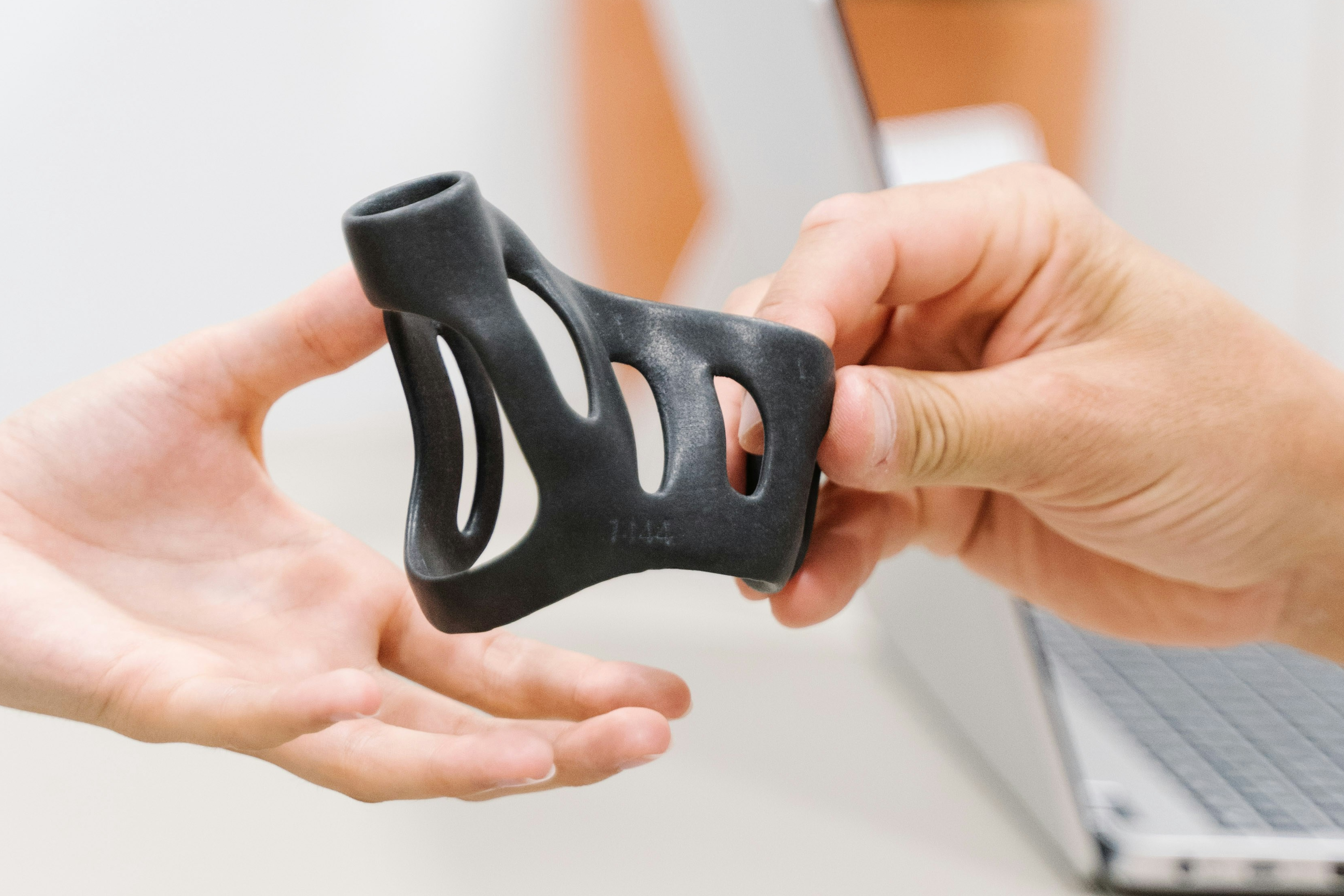
A breakdown of FDM, SLA, SLS, MJF, and CNC machining for prototype development: when to use each, how to match process and material to your validation goal.
Read the Article