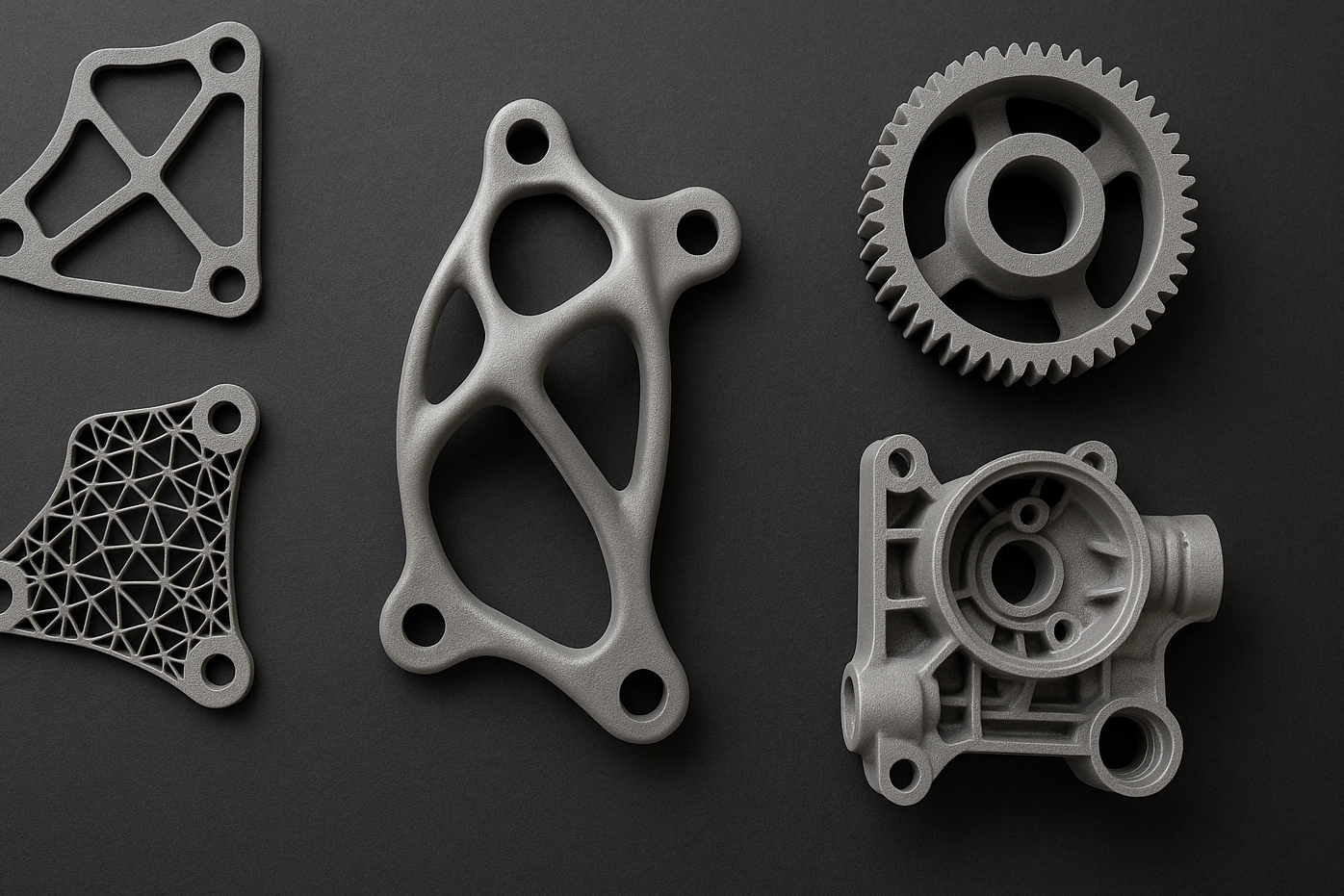
Your Guide to SLS: Advantages, Materials, and Best Practices
Selective Laser Sintering for complex, functional prototypes and end-use parts. Advantages, materials, design guidelines, and faster production.
Read the ArticleCarbon-fiber PLA with higher stiffness, low warping, and a refined matte finish.
PLA-CF blends chopped carbon fiber into PLA for noticeably higher stiffness and dimensional stability than standard PLA, plus a refined matte-black aesthetic. It suits functional prototypes and display parts where rigidity and looks matter, but heat resistance stays modest.
Carbon-Fiber Reinforced PLA, printed with Fused Deposition Modeling (FDM). Every order is reviewed by our engineering team - no minimum order quantity.
Choose PLA-CF when you need significantly more stiffness than standard PLA but do not need heat or impact resistance. It is the right material for drone frames, RC chassis plates, camera mounts, and fixtures where rigidity and low weight matter - delivering roughly 35% higher flexural modulus than PLA with the same easy printability.
If your part also needs heat resistance, PLA-CF will not help - its HDT is the same as plain PLA at 55 °C. Move to ABS-GF for combined stiffness and heat tolerance, or to SLS PA12-GF for the best stiffness-and-heat combination in powder-bed nylon. If your part needs to survive drops or cyclic stress, PLA-CF is the wrong pick: it is brittle. ABS or PA12 are tougher choices.
PLA-CF also delivers a refined matte-black aesthetic that many customers prefer for visible components and display models. If appearance drives the choice and you do not need the stiffness, standard PLA in black is cheaper.
Representative values - process- and orientation-dependent. Full technical datasheet available on request.
Plan features to print reliably and assemble cleanly in PLA-CF. Need DFM help?
Dimensional tolerance is ±0.3 mm or ±0.3%, consistent with standard PLA. The carbon fiber improves dimensional stability during cooling, so large flat surfaces hold flatness slightly better than unfilled PLA. Post-machining is possible but produces abrasive dust; we can ream bores for interference fits.
PLA-CF prints at 210–230 °C nozzle / 45–60 °C bed. A hardened-steel nozzle is required - the chopped carbon fiber is highly abrasive and will bore out a brass nozzle within a single spool. No enclosure is needed; warping is minimal like standard PLA. The fiber fill makes the material stiffer but also more brittle, so aggressive support removal can snap thin features - we use careful breakaway techniques. Drying at 45 °C for 4+ hours before printing reduces stringing from moisture absorption.
PLA-CF alongside related materials.
| PLA-CF | PLA | ABS | PA12 (SLS) | |
|---|---|---|---|---|
| Tensile strength | 38 ± 4 MPa | 30 ± 5 MPa | 33 ± 3 MPa | 48 MPa |
| Heat deflection (HDT) | 55 °C @ 0.45 MPa | 58 °C @ 0.45 MPa | 87 °C @ 0.45 MPa | 154 °C @ 0.45 MPa |
| Flexural modulus | ≈ 3,700 MPa | ≈ 2,750 MPa | ≈ 2,200 MPa | 1,730 MPa |
| Elongation | 3–5% | 8–10% | 10–15% | 15–20% |
| Density | 1.22 g/cm³ | 1.20 g/cm³ | 1.05 g/cm³ | 1.01 g/cm³ |
| Relative cost | $$ | $ | $$ | $$$ |
Where PLA-CF fits, where it doesn't, and what to use instead.
Flex modulus of 3,700 MPa - 35% stiffer than plain PLA - lets prototype brackets and housings mimic the rigidity of glass-filled production plastics.
EngineeringHigh stiffness-to-weight ratio at 1.22 g/cm³ density keeps airframes light while resisting propeller vibration and aero loads.
RoboticsLow warping and high rigidity hold optical alignment tolerances that plain PLA or ABS would creep out of under sustained static load.
EngineeringDistinctive matte-black carbon-fiber texture eliminates the need for painting or post-processing on visible components.
Art And DesignOutperforms PLA and ABS in deflection resistance for CMM fixture plates and assembly jigs where sub-millimeter positioning matters.
EngineeringFinishing options and in-stock colors for PLA-CF.
Matte carbon finish; minimal post needed.
Best for: Display & functional parts
Custom colors and dyeing available on request. Contact us for options.
Selective Laser Sintering for complex, functional prototypes and end-use parts. Advantages, materials, design guidelines, and faster production.
Read the Article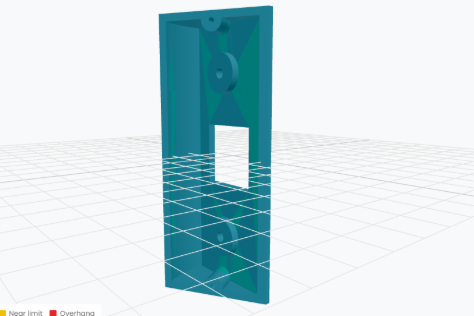
Wall thickness, tolerances, supports, and hole sizing rules for printable parts.
Read the Article