
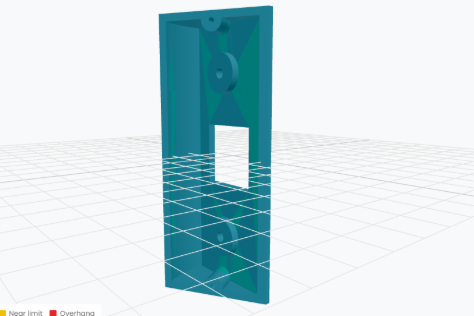
DFM for 3D Printing: A Practical Design Guide
Wall thickness, tolerances, supports, and hole sizing rules for printable parts.
Read the ArticleTransparent, water-resistant resin that polishes to near-optical clarity.
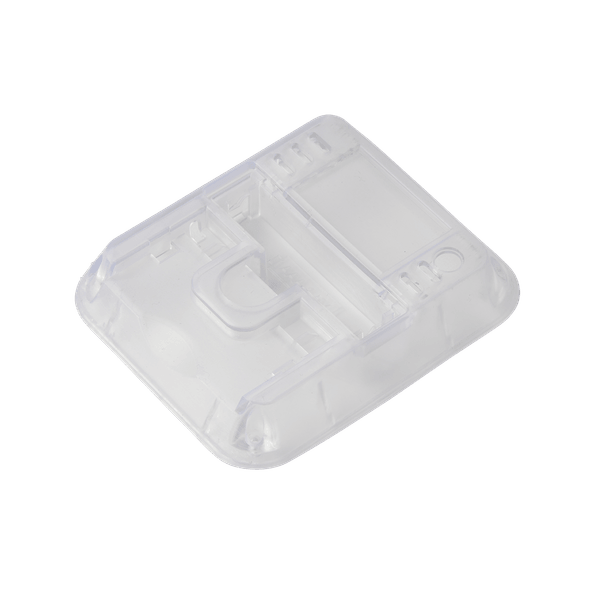
Clear V5 is Formlabs' transparent general-purpose resin, producing water-resistant parts that polish to near-optical clarity. With 60 MPa tensile and 2,750 MPa flex modulus, it delivers real mechanical performance alongside its optical properties - suitable for light pipes, flow visualization, and transparent prototype housings.
Formlabs Clear Resin V5, printed with Stereolithography (SLA). Every order is reviewed by our engineering team - no minimum order quantity.
Choose Clear V5 when your part must be transparent or translucent. It is the only Formlabs resin that polishes to near-optical clarity, making it the default for light pipes, flow-visualization channels, transparent housings, and any application where seeing through the material is a functional requirement.
Clear V5 is mechanically comparable to Grey V5 - 60 MPa tensile vs 62 MPa - so it is not sacrificing strength for transparency. It costs less than industrial SLA WaterShed ($$ vs $$$$) and runs on the Form 4, meaning faster turnaround for parts under 200 mm. For larger transparent parts, WaterShed on industrial SLA is still the correct choice.
If you do not need transparency, Grey V5 is the simpler default - no post-polishing required for a professional finish. If your clear part must also survive impact or repeated assembly, consider whether Tough 2000's toughness matters more than optical purity.
Representative values - process- and orientation-dependent. Full technical datasheet available on request.
Plan features to print reliably and assemble cleanly in Clear V5. Need DFM help?
Typical tolerance on the Form 4 is ±0.1 mm or ±0.1%. For optical-quality surfaces, polishing removes 0.05–0.1 mm of material. Specify which surfaces need optical clarity at quoting so we can orient supports to non-optical faces and minimize post-processing on critical surfaces.
Clear V5 prints on the Form 4 at 25–100 µm layer height. After printing, parts are washed in IPA for 10–15 minutes. Post-cure at 60 °C for 30 minutes under 405 nm UV light. Support placement is critical - contact points leave marks that affect clarity. We orient clear parts to place supports on non-optical surfaces. Achieving full optical transparency requires wet-sanding through 400, 800, 1200, and 2000 grit, followed by a clear coat. As-printed parts are translucent and suitable for diffuser and light-guide applications without polishing.
Clear V5 alongside related materials.
| Clear V5 | Grey V5 | Clear V5 | Tough 2000 | |
|---|---|---|---|---|
| Tensile strength | 60 MPa | 62 MPa | 60 MPa | 42 MPa |
| Heat deflection (HDT) | 74 °C @ 0.45 MPa | 71 °C @ 0.45 MPa | 74 °C @ 0.45 MPa | 54 °C @ 0.45 MPa |
| Flexural modulus | 2,750 MPa | 2,750 MPa | 2,750 MPa | 1,500 MPa |
| Elongation | 8% | 13% | 8% | 79% |
| Density | 1.18 g/cm³ | 1.18 g/cm³ | 1.18 g/cm³ | 1.15 g/cm³ |
| Relative cost | $$ | $$ | $$ | $$$ |
Where Clear V5 fits, where it doesn't, and what to use instead.
Polished Clear V5 transmits and guides 405 nm+ wavelengths through wall sections up to 10 mm thick, enabling functional illumination-uniformity testing before injection-mold tooling.
Consumer ProductsTransparent walls at 0.3 mm minimum allow direct visual observation of fluid paths, mixing zones, and bubble formation inside printed channel geometry.
Engineering60 MPa tensile and 105 MPa flex strength let clear housings survive assembly with electronics, connectors, and internal brackets - not just visual mock-ups.
Consumer Products25 µm layer height resolves channels down to 0.3 mm width, and optical clarity allows observation of reagent flow, mixing, and reaction zones.
Medical DevicesClear printed windows and curtain-wall elements at 1:20–1:50 scale simulate daylight transmission and facade transparency in presentation models.
ArchitectureFinishing options and in-stock colors for Clear V5.
Washed, post-cured; translucent as-printed surface.
Best for: Concept models, diffusers
Wet-sanded through 2000 grit and clear-coated for optical transparency.
Best for: Lenses, light pipes, flow visualization
Custom colors and dyeing available on request. Contact us for options.
Wall thickness, tolerances, supports, and hole sizing rules for printable parts.
Read the Article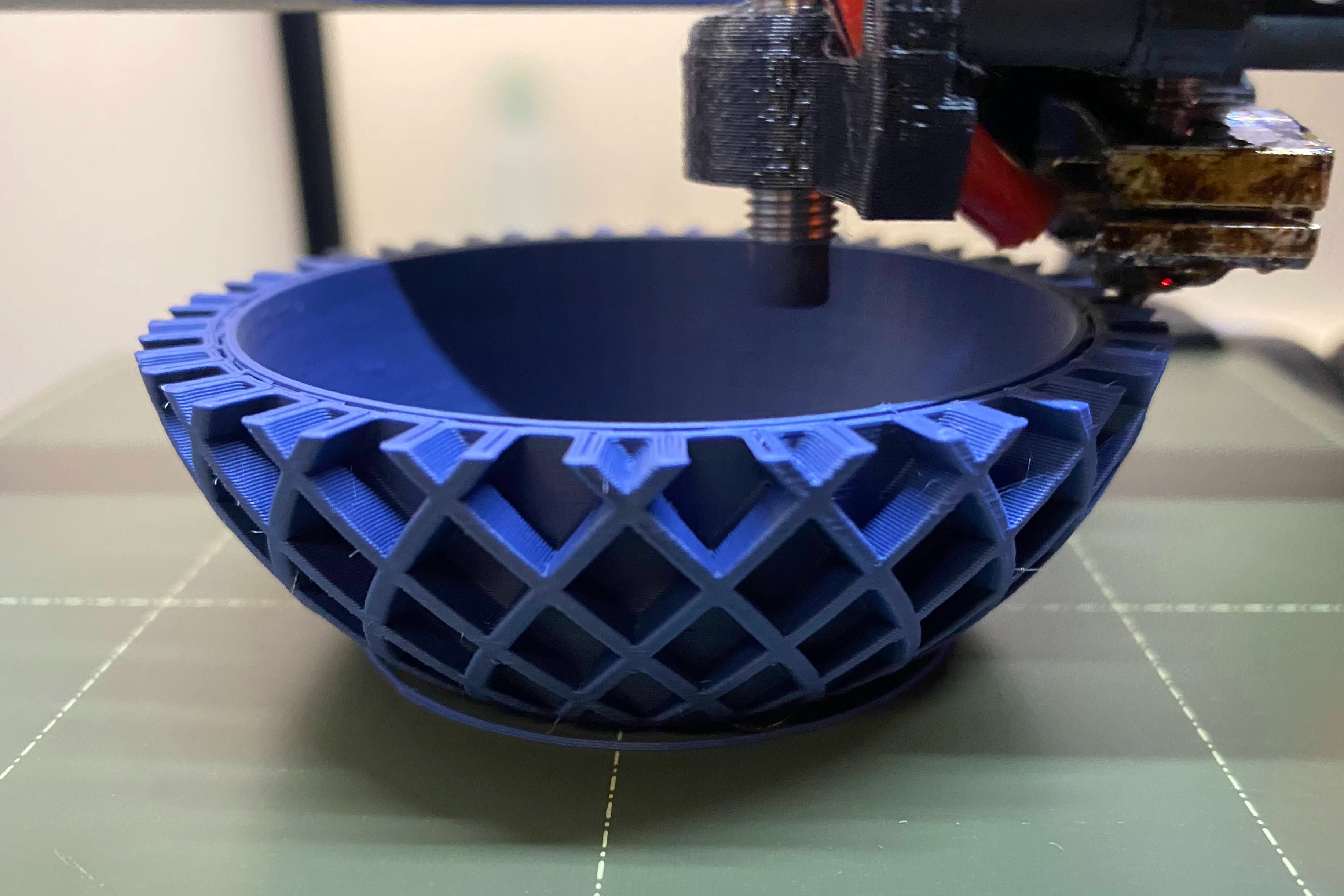
How 3D printer resolution affects surface finish, part detail, and accuracy. What to consider when selecting the right resolution for prototypes or production.
Read the Article